



When a bowl resonates, a gong vibrates, or a drum beats, it’s not just an aesthetic experience. These sounds produce measurable effects on our brain and body, which research is beginning to better understand. So let’s discover what those effects are.
The brain that adjusts to rhythms
When we listen to a regular sound, our neurons tend to synchronize with it. This phenomenon, called entrainment (or synchronization), means that the brain partially aligns itself with the external rhythm. Specifically, auditory and cortical circuits produce electrical responses that follow the frequency of the perceived sound, such as the beat of a bowl or a gong.
This synchronization can then spread to other brain regions, promoting the emergence of slow waves like alpha and theta. These rhythms are associated with states of calm, open attention, and deep relaxation. It’s a bit like external vibrations acting as a metronome for the brain, helping it shift into a more peaceful state of functioning. (Kim, S.-C., & Choi, M.-J., 2023; Ingendoh et al., 2023; Zaatar et al., 2023)
Breathing, heart and nervous system
Low, rhythmic sounds often influence our breathing, making it slower and more regular. Calm breathing, in turn, leads to an increase in heart rate variability (HRV), a sign of activation of the parasympathetic nervous system.
This system helps the body relax, recover, and reduce the impact of stress. Several studies also show a decrease in cortisol, the stress hormone, after sound meditation sessions or sessions with singing bowls (Arnold et al., 2024; Cai et al., 2025).

Séance de Sonothérapie
The vibrations felt by the body
With instruments like gongs, drums, or bowls placed close to the body, we don’t just “hear” the sound: we physically feel it. The low frequencies and rich harmonics travel through the tissues via bone conduction and the skin. These vibrations activate the mechanoreceptors of our somatosensory system, which send signals to the brain.
This creates a holistic experience, both auditory and bodily. The sound becomes a subtle tactile sensation, sometimes perceived as an internal massage. This dual channel—hearing and feeling—can enhance self-awareness, grounding, and deep relaxation.
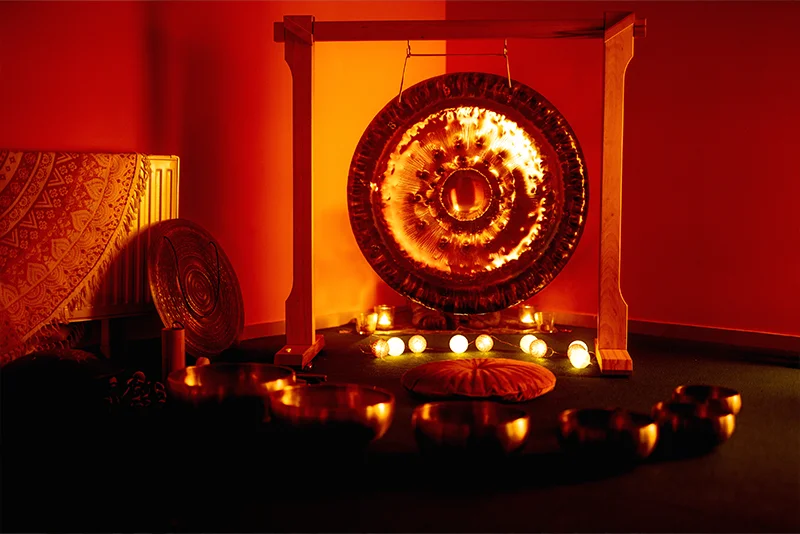
Séance de Sonothérapie
The importance of the framework
Finally, the effect doesn’t come solely from the sound. The reclining posture, the atmosphere, the feeling of security, and the intention set also play a role. They prepare the body and mind to receive the physiological and emotional effects of the session.
In summary
The sounds used in sound therapy influence brain activity, breathing, the heart, stress hormones, and even our bodily sensations. It’s not magic: it’s a combination of physiological and perceptual phenomena that, together, lead to a state of relaxation and centering.
My name is Kevin Poupard and I support those who feel the need to reconnect with their inner selves through energetic and vibrational healing.